
Most people contract a pressure wash and have no real idea where the water has gone after the pressure wash has finished its task. It rolls down the driveway, down the drain, and it’s gone — or is it? However, on the construction and business sites throughout Sydney, that runoff comes with much more than dirt. It can result from the flow of oil, cement residue, paint flakes, detergent, and possibly heavy metals; its destination is important, legally, environmentally, and economically.
A Real Problem on a Real Job Site
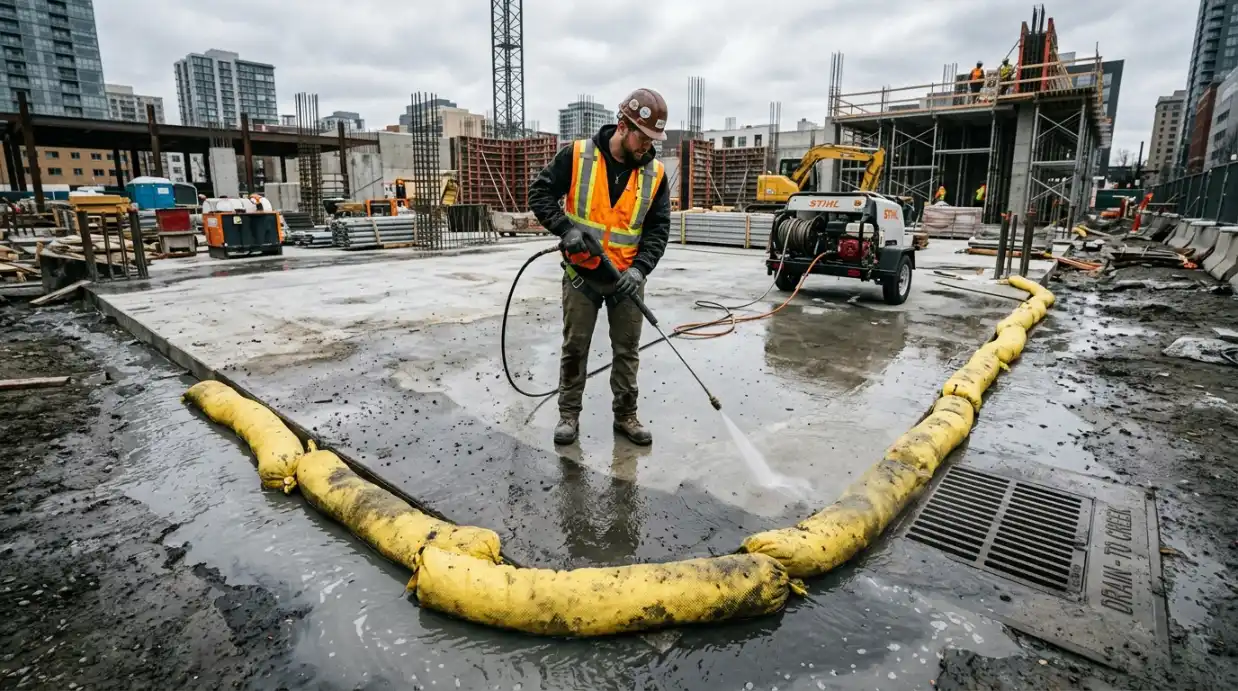
We received a call for help from a nearby site manager last year who was in contact with the council. He had suspected that his crew had taken on a cost-cutting pressure washing firm which cleaned the concrete slabs prior to final inspection of the building. The contractor blasted the surface, and the grey sludge went straight down onto the street, where it was directed 1 block into a drain sufficiently sized for stormwater. It was spotted by a local resident, who took a photo of it and alerted the local council. The site manager received a warning this time and was advised that if this behavior was repeated, another penalty would be issued according to the EPA guidelines for the State of South Australia and similar EPA guidelines developed in the Sydney area.
It’s in response to that call that we’re writing this post. Pressure washing wastewater isn’t just “dirty water.” It is considered contaminated runoff when you’re working on a construction site, and it gives a lot of answers about whether or not a contractor knows what they’re doing.
Soiling up the water!
While a pressure washing machine is used to remove dirt from a driveway, facade, or construction slab, the water used is loaded with the dirt that was on the surface being cleaned. On residential works, it is most commonly mud, algae, and all things dirty. It is a different matter on construction and commercial properties.
Common pollutants found in construction-related pressure washer wash water are:
- Cement and concrete dust, which causes the water to become extremely alkaline
- Oil, grease, and fuel residue from machinery or vehicles
- Paint chips and solvent residue.
- Washing during the cleaning process can cause the oil to mix with dirt.
- Sediment, dirt, and organic matter
That’s not to be discharged into a stormwater treatment system that usually combines no treatment with flowing directly into a river, wetland or ocean.
For some people, it seems the solution to an untreated runoff problem is simply to leave it as is.
This is the bit that people don’t know about. The stormwater drains do not connect to a treatment plant. Sewage is treated before it can enter the natural waterways, but stormwater proceeds directly to the natural waterways. When pressure washer runoff is not filtered into the treatment system, it is not “gone”; it is being dropped directly into local creeks, harbors, or coastal waters.
There are real implications here. Runoff water from cement can cause rapid changes in pH and cause death to aquatic organisms. The presence of oil and detergent residue causes ecosystem disruption and can be in violation of laws that protect the environment. An uncontrolled discharge event could lead to fines, delays at inspection for a construction company, or loss of reputation amongst the council and clients.
The way Responsible Contractors manage it.
The difference between a compliant pressure washing job and a risky job is typically centered around preparation and not equipment. Wastewater recovery is handled as a part of the process by a qualified team, not as a sideline.
On a well-run site, this is what you’d typically see:
- Containment first: Barriers, socks, or berms to prevent water from reaching drains or gutters before washing commences.
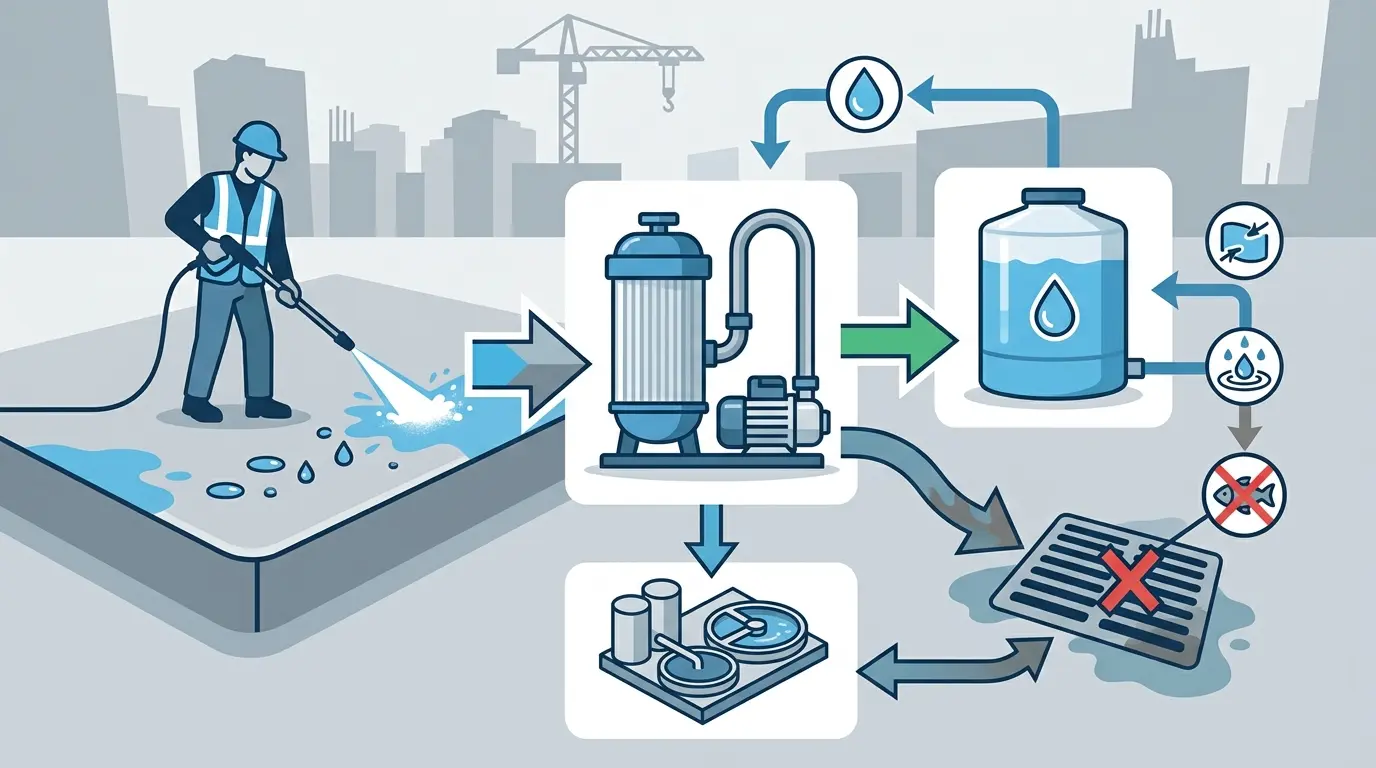
- Vacuum recovery systems: These are designed to capture the wastewater as it is generated instead of allowing it to flow away.
- Removing sediment, oil, and other debris from the water on location with filtering systems or settling tanks.
- Proper disposal: Carrying collected wastewater to an approved treatment facility or disposing of collected wastewater through a sanitary sewer system connection (where permitted).
- If required, water testing before discharge for larger, commercial, or industrial jobs: pH, level of contaminants.
This idea about water disposal in pressure washing isn’t merely a compliance item; it’s a commitment to starting right from the get-go.
The reason behind Grey Water Recycling.
Many contractors are making the move to grey water recycling on larger jobs, especially continuous construction maintenance contracts. Rather than seeing each drop of wastewater as a disposal problem, filter units clean on-site water which can be utilized for additional washing, dust suppression, or site cleansing in general.
This is a bit more than an environmental courtesy. This eliminates the need to truck off-site a lot of wastewater in total, lowers the disposal costs on larger sites over time, and reduces water used on the large site. For construction companies with multiple properties, it is now standard practice, not an optional extra, and furthermore it’s arguably the most critical part of a sustainable construction site.
Why This Matters More on Construction Sites
The pollution of residential driveways involves a degree of risk, but that doesn’t even compare to the level of pollution associated with residential construction sites. The surface areas are bigger, there’s more contamination, and the councils and environmental authorities are more vigilant about the levels, so there’s less room for error. An uncontrolled discharge on a commercial job can lead to an EPA investigation, the postponement of a project schedule, or damage a potentially long-term client relationship.
Which is the gist of it. Everyone can shoot at a dirty surface with a pressure washer. Experience really shows in the management of what happens with the water after its production, its containment, its filtration, and its disposal.