
Quick Answer
Safety cannot be determined by a “safe number” of liters or milliliters, as safety depends on where the water is going, not how much of it there is. The short answer: water is rarely the problem – it’s the excess and uncontrolled water that enters stormwater drains, a garden bed, or waterway that’s the problem. With genuine eco-friendly pressure washing, runoff will not infiltrate the stormwater system, cause erosion damage to landscaped areas, or be treated with a product that cannot be biodegraded; the product won’t be discharged at the coast in an untreated state, as it does in South Australia.
A Driveway, the Dried-Out Grass, and a Phone Call
Last spring we were contacted by a client who complained of a familiar ailment in the Adelaide Hills — years of dirt and dust had been removed from the driveway and back patio of her home, all with a non-expensive pressure washing company. The concrete had a fresh appearance, but started to brown around the driveway corners within a week, and a creeper bed of natives next to the runoff in the street had withered. The operator had used an undiluted, chlorine-based cleaning agent and allowed the cleaning water to run off into the garden and down the garden gutter.
There was no point made of being careless while working on that job. This happens when traveling fast is the priority instead of paying attention to runoff. The surrounding beds around her were re-gypsumed and re-sown with new soil; we also changed her regular cleans to an eco-friendly cleaner diluted as per label: all cleaning products are eco-friendly now; we have to be careful when using them if they are non-toxic. About six weeks later her garden sprang back to life. It is a small story, but one which is almost invariably mentioned in one form or other almost every month — and justifiably so, as “how much runoff is safe” is a question that must be answered correctly, not glossed over.
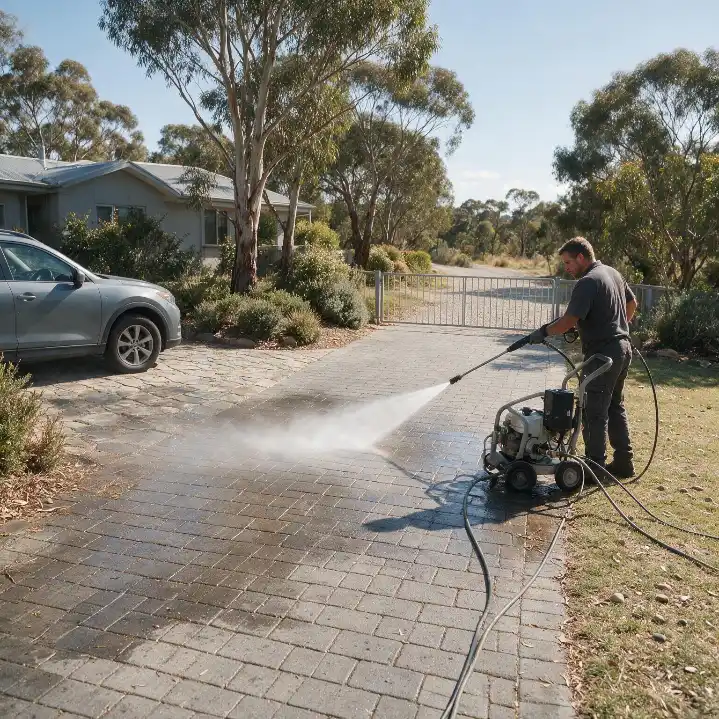
How Much Water Runoff Is Really Safe?
The pressure washers professionals use — see our breakdown of professional pressure washing equipment — do not pose the environmental threat inferred by most people. That’s because a quality machine is just as economical with water as a garden hose turned on to create the same effect, but will require a much smaller amount of water per area. The question as to where that water goes is far more crucial.
The South Australian Environment Protection Authority (EPA SA) has no doubts about this: stormwater drains are pipes designed to collect rain, not wash water, and household waste resulting from house-cleaning or roof cleaning should not get into the stormwater pipe. That’s because stormwater doesn’t treat the water before it gets to the coast; it serves a completely different purpose than domestic wastewater — once domestic wastewater is generated, it is piped away to treat it first at a treatment plant, although stormwater drains straight into local rivers and waterways and into the sea. This is more important than the number of liters on the job.
In reality, “safe” water usage in surface cleaning of the exterior applies primarily to three points:
- Containment first. Wash water should NOT be channeled to a gutter or to a drainage and should be directed to grass, a garden bed or a bunded area where it will percolate into the soil.
- Volume equal to the surface.A driveway only requires a small amount of water, as compared to a full house washing; and if you scale down the approach to the job, then there’s less waste, but fewer results. On older slabs, matching volume to the surface also protects against concrete pressure cleaning mistakes that can force water into existing cracks.
- Timing and weather. Pre-washing before forecast rain runs the risk of the water washing residues directly into stormwater before sedimentation or natural breakdown occurs.
EPA also reports that coastal pollution due to urban run-off has already taken its toll and that over the years this stormwater and wastewater contamination is responsible for the degradation of seagrass along Adelaide’s metropolitan coastline in excess of 5,000 hectares. Whether the outdoor cleaning company is conscious of it or not, this is the situation that all of them are working against.
Chemical Runoff and the Chemical-Free Cleaning Question
This is what ever gets everyone, including well-intentioned people, into trouble. Unless a product is labeled “harmless when dumped in a drain,” or “eco,” or “biodegradable,” it does not mean that it is safe once it gets into the drain. EPA SA’s guidance for mobile cleaning operators is straight to the point in this regard – even a so-called biodegradable product can be given serious cause for concern and cause environmental damage if it enters the stormwater infrastructure, stream, river, or ocean before it has a chance to be degraded naturally. Biodegradable does not mean that it is safe to throw into a drain because of the concentration.
For this reason, chemical-free cleaning can be considered in any place where it is a realistic choice. With an appropriate nozzle and pressure and without any chemical added, hot water can even eliminate considerable amounts of mould, algae and grime. If the cleaning agent really does need to be used (oil stains, heavy moss, etc., tannin stains on timber decking), the objective is to apply the lowest dose of a truly biodegradable product onto the surface to be cleaned, then remove it for rinsing into soil or else catch it.
Careful operators have a few habits to help them distinguish themselves from careless operators:
- To remove loose debris and organics from roads before washing, thus reducing the amount of contamination in the runoff.
- Using a concentrate that is diluted in proportion to the manufacturer’s instructions and not as a guideline for how strong it needs to be for the cleaning task; using a concentrate that is diluted at the manufacturer’s recommended rate, not according to how strong it looks in the mix.
- Prevent wastewater from flowing near stormwater pits, grates for driveways, or drainage swales without plugging or diverting the water.
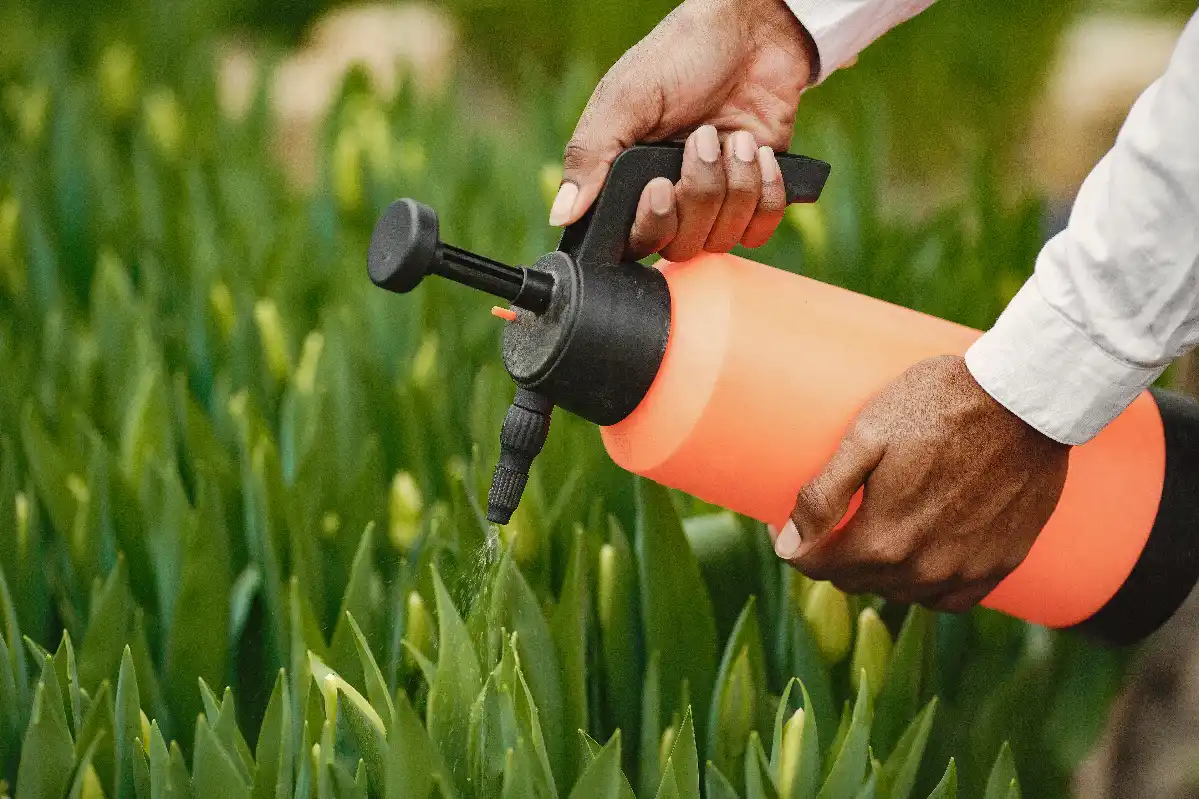
Global Solutions, Local Action: “Environmentally Friendly Cleaning” on the Ground
Environmentally friendly cleaning isn’t simply a marketing tag; it is a sequence of small decisions that are made before even turning on the power supply to the machine: which direction does a surface drain; only use a specific cleaning solution when cleaning cannot be done with hot water and pressure; and planning where the wastewater will actually go. Not as fast as a ‘spray and go’ job. It’s also the contrast between a driveway that looks good for a season and one that doesn’t kill the garden bed that borders it, without quietly. It’s also the difference between a driveway that looks good for a couple of years and looks bad for the rest of the years X2, and a driveway that looks good for a while and then looks bad without quietly killing the garden bed next to it.
This is generally what this looks like for most residential jobs around Adelaide, such as washing early in the day when there is no rain forecast or using containment on any surface which slopes towards a public drain, and only chemical treatments on specific areas only – or a small patch of surface where required, not generalized throughout an entire surface.