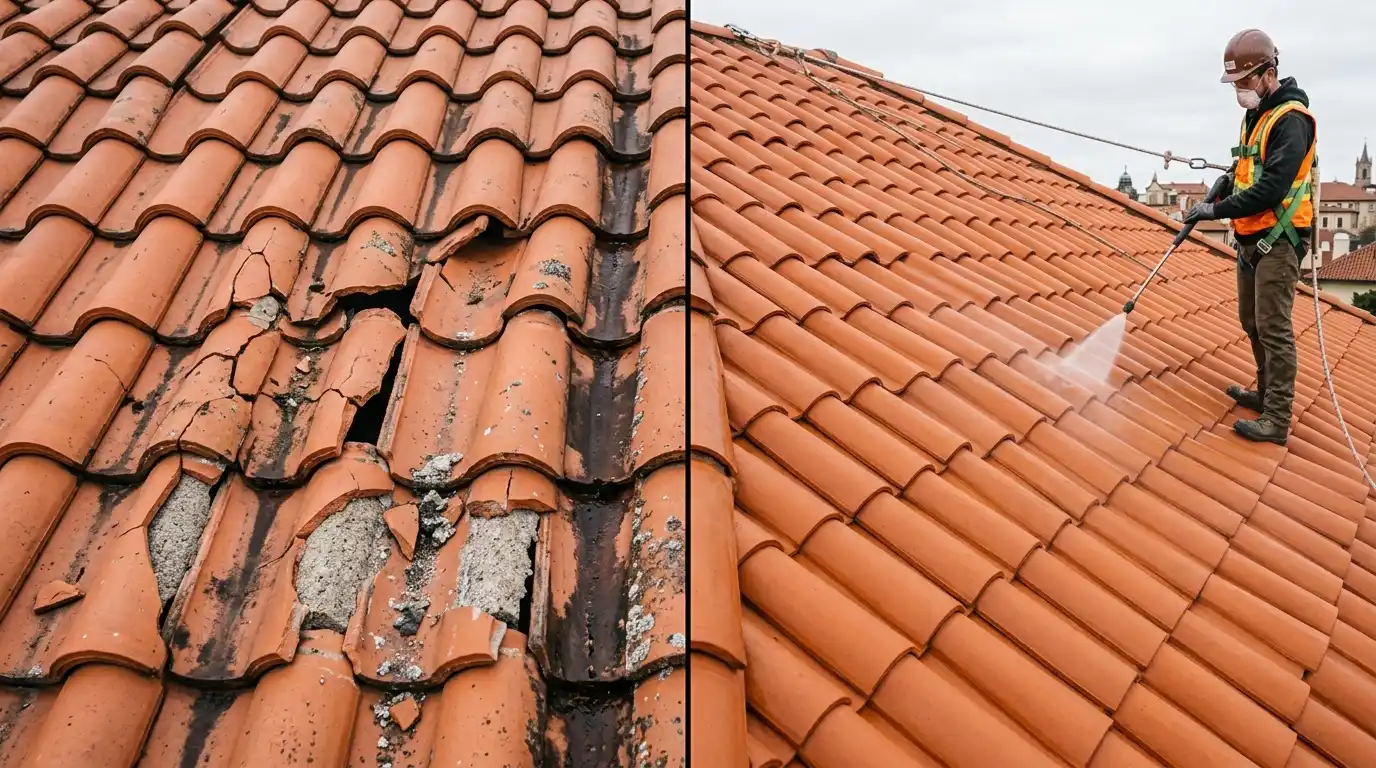
Two identical roofs with the same moss and dirt, cleaned 1 week later by two different companies. One DISAPPEARS, leaving it virtually “new”! The other one is left with shattered tiles, tilting edges, and an unexpected repair invoice. It’s the same old assignment but so many different results. This difference typically is not about luck, but method, equipment, and experience.
Professional roof cleaning Adelaide businesses rely on isn’t as simple as simply wiping away dirt. It’s all about knowing the character of the roof, what it’s comprised of, and its age concerning how much it can actually endure before giving way.
A Roof That Was Never the Same Again
Last year a client visited us after not being happy with her previous cleaner. He had rented out the cleaning service under a local ad for a ‘quick roof clean’, believing his tiles would be pristine before selling out his house. Rather, the cleaner used a petrol pressure washer on the highest setting and scrubbed in narrow passes and repeated passes over identical tilings for years to get rid of the lichens.
The roof appeared cleaner at the end of the work, but it turned out there was more to it. There were a few cracks extending from half an inch to one inch across several tiles. Others, however, had lost the protective covering and weathered, weakening to a state of porosity. Two tiles within six months had fully lost adherence due to the storm, and the client had been offered a repair bill higher than originally paid for cleaning.
Please note the difference between cleaners; it’s not a story most homeowners know:
Salmonella is an example that illustrates how having more pressure can actually be of little help.
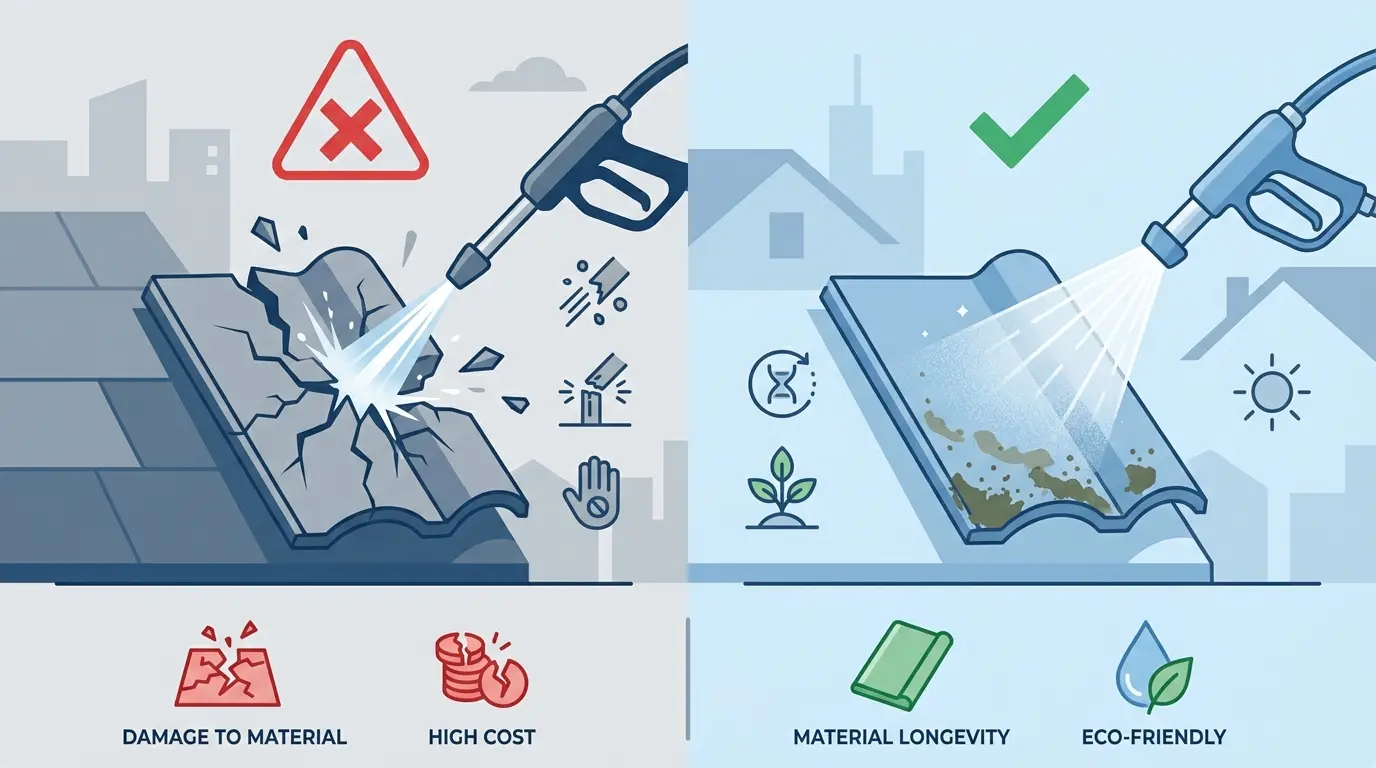
There is a general belief that the more pressure, the better the clean. That could be the case on concrete or brick. On a roof, it tends to be the wrong thing on the upside.
Some of the biggest high-pressure roof cleaning risks include:
- Cracked or chipped tiles, particularly older terracotta or concrete tiles
- Revealing the waterproofing of tiles.
- When drained water is pressed under the tiles and into the space beneath the roof.
- Removing the cover tiles completely and allowing water to penetrate and enter the hole,
- Increased degradation, which may reduce the life expectancy of the roofing material.
Roofs are NOT sheer flat, impervious surfaces, like a driveway. They consist of individual tiles and sheets that come in decades of age, which are placed on a building that wasn’t intended for direct high-pressure water in close quarters. After this surface is damaged, the damage may not be immediately apparent. It may act out within months as leaks, crooked grout lines, or grout that shifts and slips.
The most prevalent roof cleaning errors that you might make are listed below.
More than pressure settings alone, there is a lot of damage to the roof caused by technique. Some of the most common roof cleaning errors we’ve encountered are:
- Adding up footwear weight on only a single tile, resulting in cracks on the floor.
- Installing a nozzle at the incorrect angle (water is sent under tile laps rather than across the tile surface)
- Failure to inspect the roof properly before beginning, missing weak or cracked tiles.
- Employing extreme chemical baths that can break down and wear sealants or coatings with age
- Not taking enough time to cut costs, sometimes completely missing safety checks.
No one can tell these errors from the ground. Customer validation is proof that a roof may appear to be perfectly clean and still have real damage to the roof structure.
The truth about the Best Way to Clean a Roof Safely.
The qualities that contractors have that consistently ensure that things are done well in a respectable and proper manner are all the same, and it does not matter what type of roof you might have. It’s about the “right tool for the right job” and not the “same tool for all jobs.”
A safe roof cleaning job should consist of:
- Soft washing at high pressure: Removing moss, lichen, and grime at high pressure and soft with the right cleaning solutions without the risk of harm to the surface of the tile.
- Preparation of roof assessment first: Inspection of the roof for existing cracks, loose roof tiles, and weak areas that will be checked before the water gets into the roof.
- Correct distance and angle: To work with the tile lines, not against them, and keep the nozzle at a safe distance.
- Designated foot protection: Ensuring proper use of harnesses, roof levers, and ensuring that weight placement prevents tiling cracking whilst walking.
- Protective treatment:sealing & coating when necessary, to extend the life of the roof after the clean.
It is not as fast as a pressure blast and costs more in the beginning period. Rather, it is more active in protecting the asset, but the asset does not get worn away in the process.
What role does experience play? What is the advantage of experience?
It’s a service that anyone can have and provide roof cleaning with his pressure washer. The difference between a good approach and a risky one is to grasp which types of roofing material will exhibit certain behaviors when put to the test and tailor your approach differently in those areas. The various types of concrete tiles, terracotta, Colorbond, or slate respond differently, and this is where most damage occurs when treating them all alike.
On larger properties and commercial roofs across Australia, this is even more of an issue as an error isn’t simply a cosmetic problem. It can lead to water intrusion, structural repairs, and expenses that are significantly larger than clean-up costs. A well-trained team will also be able to identify a time when they do not need to exert all pressure and a time when they will be able to obtain a similar visual effect without the risk of resorting to high pressure.