
It’s one of the most common questions we hear on render cleaning jobs across Australia, and it isn’t really about what’s sitting on the wall — it’s about what’s growing on it at a microscopic level. Render is a popular finish because it looks clean, modern and durable, but a shaded wall weathers very differently to one that gets full sun most of the day. Understanding why can save a lot of frustration, and a lot of repeat cleaning.
It’s Not Just Rain, Wind or Falling Debris
Most people assume the shaded side is dirtier because it copes with more rain, wind, or falling leaves. Those factors play a minor role, but they’re not the real cause — moisture retention is. A wall in direct sunlight dries out quickly after rain or morning dew, and UV exposure evaporates surface moisture within a few hours, which makes it hard for algae, mould, and lichen to establish. A shaded wall, on the other hand, can stay damp for days, especially in cooler climates or on properties boxed in by trees, fences, or neighbouring buildings.
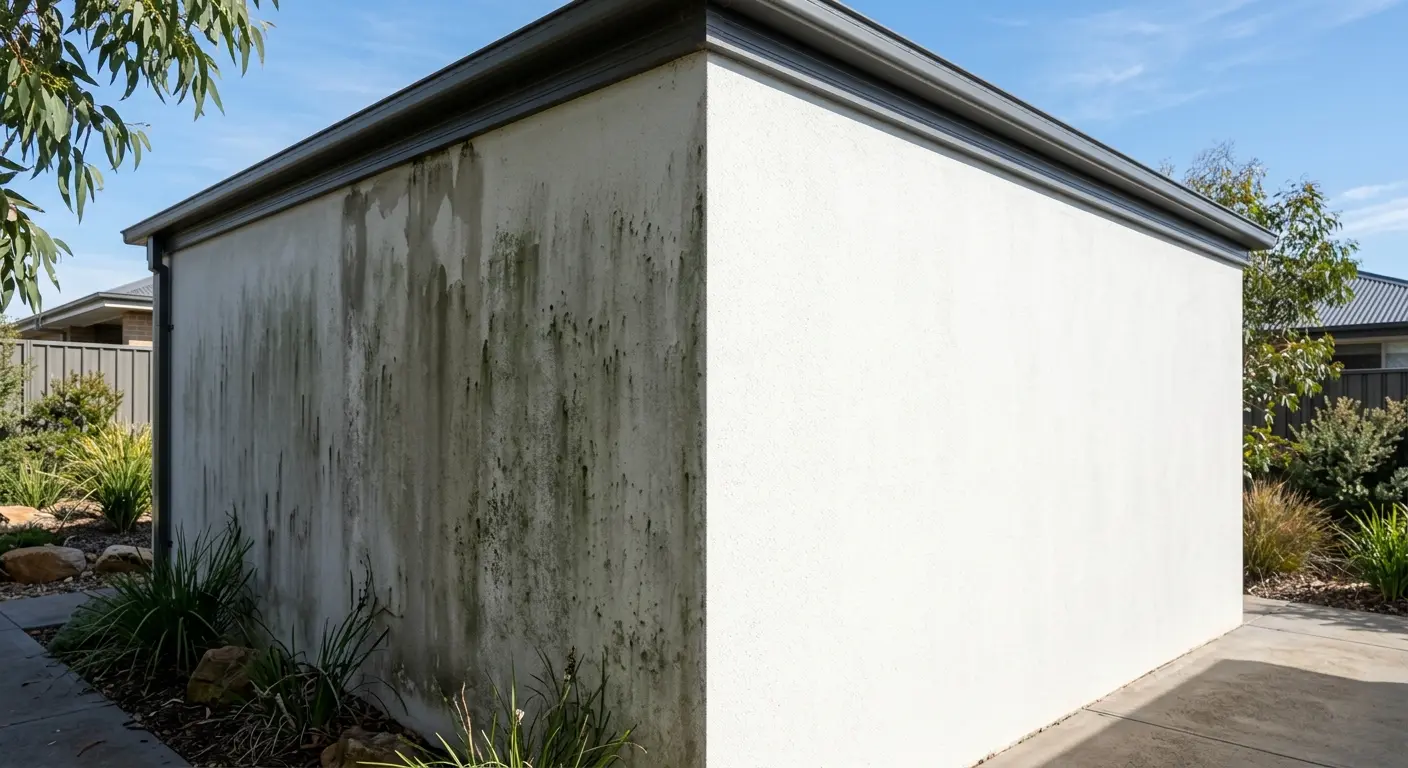
That constant dampness is exactly what organic growth needs. Algae and mould spores don’t settle on a damp surface and sit idle — they multiply. This is why so many of our dirty render cleaning calls come from the south side of a house, particularly in humid coastal areas or homes with minimal direct sun. A few conditions make render especially vulnerable: less UV exposure means less natural die-off of mould spores and algae; poor air movement behind fences, trees, or nearby structures slows drying; cooler night-time wall temperatures increase condensation; and a heavily textured render finish has more surface pores for organic growth to grip onto.
A Two-Tone House in the Blue Mountains
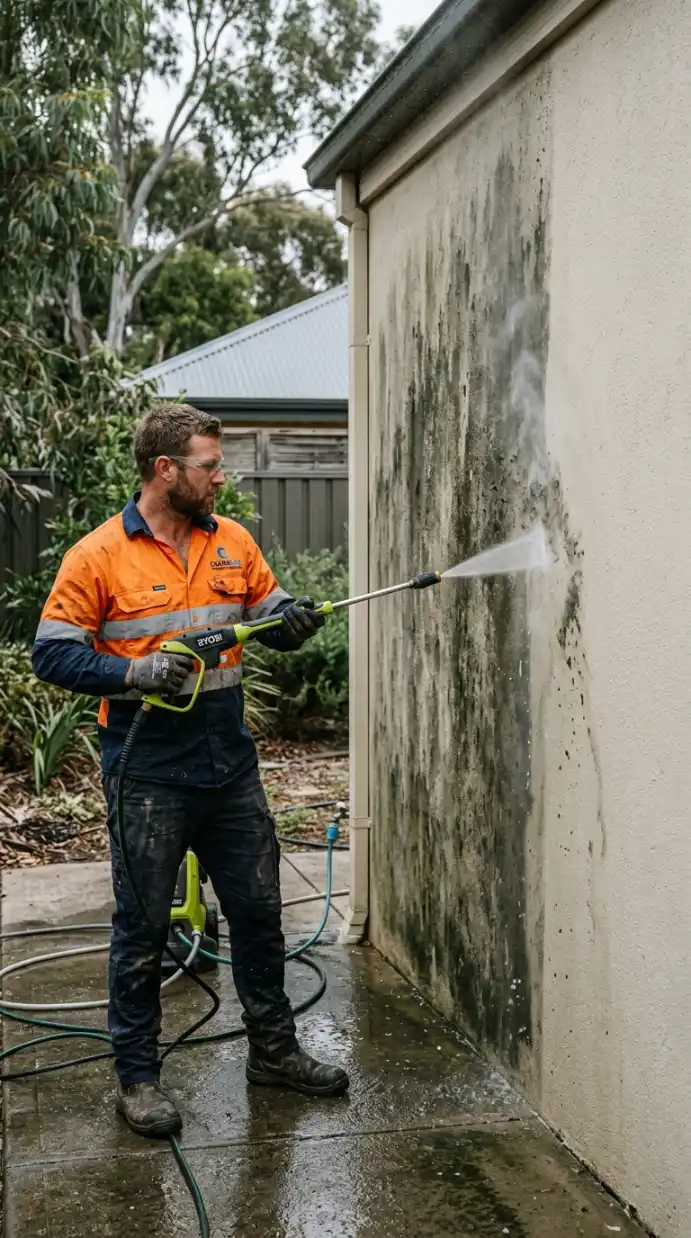
A few months ago we visited a home in the Blue Mountains whose owner was genuinely puzzled. The house had been rendered just three years earlier, and the north-facing front, which caught sun for more than half the day, still looked practically new. The side wall, nestled behind a tall paling fence and a large gum tree, had turned a discoloured green-grey, making the whole house look run-down and neglected on that side.
He’d already scrubbed it as best he could with a broom and diluted bleach, but the grime kept coming back within weeks. What he didn’t know was that scrubbing doesn’t remove the cause. Mould and algae spores work their way into the porous surface of render, so wiping only clears what’s visible, leaving growth in the top layer ready to return the moment moisture comes back.
Once we assessed the wall, it was clear this wasn’t just cosmetic dirt — it was living growth feeding on moisture and low light. We carried out a controlled render pressure wash, careful not to use enough force to damage the render’s texture, then treated the surface to stop regrowth. Within 24 hours the wall matched the rest of the house. Just as importantly, we talked him through a few small changes — trimming back the overhanging branches chief among them — to help keep it that way.
His situation is a pattern we see constantly. It’s rarely about scrubbing too little or blaming the wrong cleaner. It’s about not knowing that shaded render needs a different approach altogether.
Cleaning and Protecting Shaded Render Properly
Know what you’re looking at first. Not every discolouration is the same. Dust and pollution buildup usually cleans off easily, but green or black staining is typically biological growth that needs a specific treatment. Dry brushing or hosing without treatment just spreads the spores rather than removing them.
Be careful with pressure.Pressure washing lifts embedded dirt and bird droppings well, but only at the right pressure and distance. Too much force can damage the render’s texture, drive water in behind the surface, and create the very moisture problem you’re trying to fix — especially on older or more delicate render finishes.
Clean the cause, not just the stain. Rinsing alone doesn’t get rid of it. A proper render mould prevention treatment targets the spores still sitting in the render’s pores, which meaningfully slows regrowth. On heavily shaded walls, this is often the difference between a clean wall for a season and a clean wall for years.
Improve airflow and light where you can. Prune back overhanging branches or overgrown shrubs near the wall, avoid packing fences too tightly so air can move through, redirect sprinklers or downpipes away from repeatedly wetting the same section of wall, and check gutters regularly, since an overflow adds constant localised moisture.
Plan maintenance around shade. Shaded render might only need attention every couple of years, while a sunnier wall can go longer between lighter cleans. Staying ahead of it is far cheaper and easier than trying to rescue a wall that’s been left for years.
Why Professional House Render Cleaning Matters
Cleaning what’s on the surface doesn’t fix what’s underneath it, which is why DIY attempts — like the one our Blue Mountains client tried — so often fail. Professional house render cleaning takes wall orientation, the type of growth, the condition of the render, and the surrounding environment into account before choosing a method. That matters because the wrong chemicals or pressure can strip protective coatings and void manufacturer warranties, untreated biological growth tends to reappear within weeks, repeated DIY attempts can wear down the render surface and lead to costly repairs, and a professional assessment can catch early moisture damage before it becomes structural.
Keeping a Consistent Look Across Your Home
How much sun each side of a house gets is a fixed part of its design and can’t really be changed. But knowing that shaded render gets dirty faster lets you get ahead of it instead of reacting once it’s obvious. With the right technique, the right timing, and a few small changes to the environment around the wall, every side of the house can stay consistent, whatever direction it faces.
If one side of your home is looking patchy while the other stays spotless, it’s not bad luck — it’s biology. Get in touch with our team today for professional render cleaning that gets to the real cause, not just the surface stain.